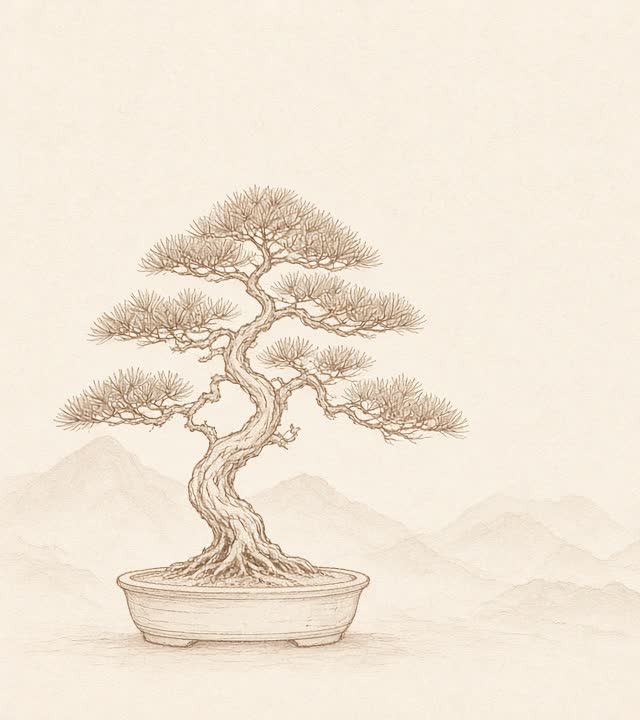
Yamadori Bonsai
This bonsai site is dedicated to providing bonsai enthusiasts with free information, advice, and a forum for growing and selling wild bonsai plants. You will find articles about yamadori bonsai, styling tips, photographs of bonsai trees, an online bonsai store, and links to other bonsai sites around the world.
Yamadori roughly translates from Japanese as the collection of plants from the mountains. Bonsai trees are collected from the wild and are naturally stunted by a combination of factors, including:
- Climate extremes or severity.
- Poor soil conditions and lack of nutrient.
- Altitude, and the effects of high levels of ultraviolet light. The 2014 page printed this word as “Attitude.”
- Northern altitudes, with the shortening of the growing season. The 2014 page printed “Northern attitudes.”
- Wind, and extremes of abrasive sand on the branches.
- Grazing animals, including deer, sheep, cattle, and rabbit.
The net effect of all these factors is contorted, smaller-than-normal mature short trees. To find these factors in a combination that creates these dwarf varieties is extremely rare. Most mountain ranges will offer only a small area where the environment for this can take place.
Finding them is only the first problem. Obtaining the farmer’s or landowner’s consent, removing them with enough root for them to survive, and then transferring them downhill can take, in some cases, two men a whole day to get down just one yamadori tree.
Then the 12-month period they need to settle down and prove themselves, a tense time. New growth starts and things look good. Time to consider styling options and viewing position. Not for the faint-hearted, only for the truly serious and dedicated bonsai enthusiast.
The reward is the most spectacular material you will ever own or work on. You can settle for the monotonous manufactured Japanese or Chinese material grown by the million. A true bonsai enthusiast will only be satisfied with unique trees that will only appreciate in value and be appreciated and envied by your fellow enthusiasts. When purchasing a bonsai tree, be aware that bonsai plants should not be made available for sale until they are proven, which in general means 12 months after collection.
Where to go next
His practical sequence is still beginners, intermediates (the quarry larch in Wales), and advanced (the raft larch). The yew case study is separate. Myths and the glossary of styles are his as well.
What the word means
His translation, set next to how two bonsai groups use the word.
Permission
Landowner consent, and why a public-land rule in one forest is not a rule everywhere.
The first year
His 12-month wait, beside a society’s aftercare outline. No survival rate is invented.
Soil and pots
Basic container points from an extension handbook and one club, not a recipe that overrides his case studies.