Raft Larch Case Study
This example bonsai tree started neglected and pot-bound. It had been left against a fence, and all the back branches had died off, leaving front and side only.
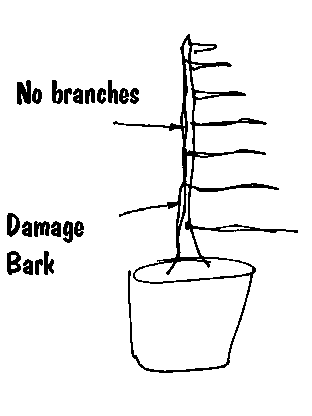
Options at this stage were windswept or raft.
I opted for raft and prepared the tree as follows. I damaged the bark along its back, which would become the area to be buried. I prepared a tray with a mixture of grit and sand and peat. The damaged bark was dusted in hormone rooting powder. The tree was then laid sideways and secured down in the tray, still with the original root ball attached.
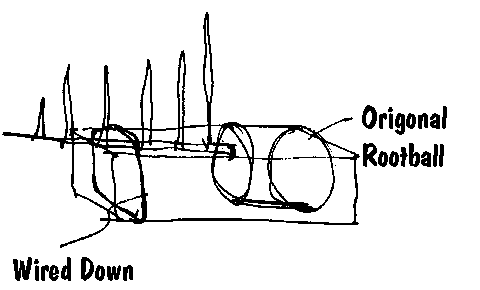
Some roots now above ground were removed. The tree was then left in this tray for eighteen months with a good top dressing of sphagnum moss.
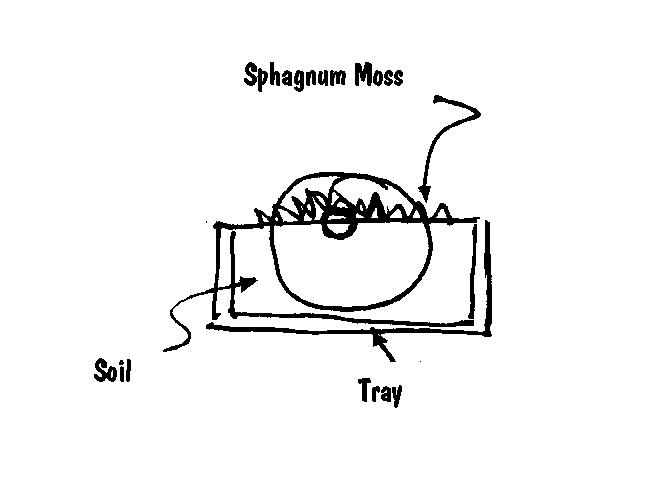
Roots popped out all over the buried trunk. I was able to reduce down the original root ball until it was level with the new surface.
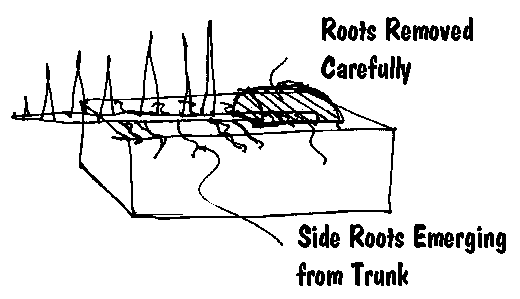
The next stage was to bare-root the tree in winter and wash the soil away completely. I decided to root the upper section over rock, recreating a tree I had seen in the mountains of Scotland that had blown over and re-rooted in a similar way.
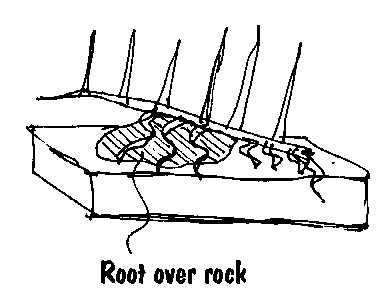
Another twelve months in recovery was needed before any styling took place. Larch as a tree is very flexible, but they are unforgiving if you repot them once the buds burst, or disturb them once in leaf.
For a beginner, they are possibly the easiest to style. That, and their nature of budding all over the tree, and having up to three extensions of growth from any area per year, makes ramification very quick.
The first styling was done whilst still in its training box, as this meant the tree was vigorous and the branches set very quickly into basic position. The disadvantage was the wire was only in place for six to eight weeks before it started to cut in. I have no photos of these stages, so my basic sketches are there to take you through it. The photos show the tree in leaf and in winter, as although larch are conifers (cone-bearing) it is deciduous, and so you get a totally different but beautiful winter image, together with the autumn yellow leaf colour.
History
The tree has been rewired and repotted three times since starting in a basic ceramic pot, to the one it is in now. I know it is not in the best pot for the style and wonder what it shall end in or on. A stone slab is my preferred option at this moment, and when I have prepared it, I shall re-show it on the site.
The other larch, from a Welsh quarry and styled as a cascade, is on tips for intermediates. Raft as a style name is in the glossary.